
Annapurna Circuit Trek
12 Days
Overview
Our trek starts from Besisahar alongside the Marsyangdi River and takes you to its source just beyond Annapurna. We then head to Manang and later cross Thorong La Pass (5416 m). We pass through many historic and culturally rich villages along the route and then climb to Poon Hill for a birds-eye view of the surrounding peaks, a spectacle that will leave you breathless. perspective. Leaving Poon Hill we descend back to Pokhara.
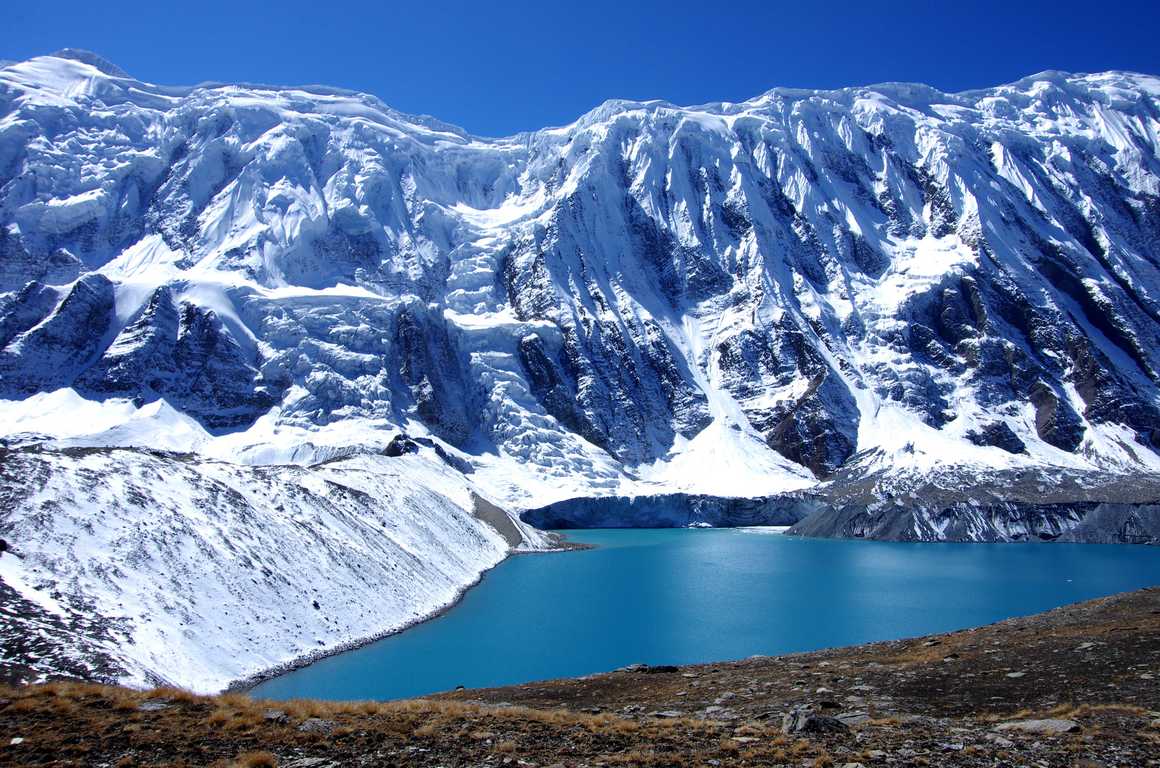
You can expect to see along the trail the massive snow-capped peaks of Annapurna II, Annapurna III, Lamjung Kailas, and Annapurna South. Besides the giants, you will also view Tilitso Himal, Machapuchare, Dhaulagiri, Tukuche Ri, and Nilgiri South. One of the main features of this trek is being exposed to the unique cultures of various villages and their enduring lifestyles high in the mountains, such as the Gurung, Tamang, Sherpa, Magar, and Thakali people. Many of these villages have age-old Buddhist an Hindu temples.
Your guide will take you through rhododendron and Cyprus forests, across many suspension bridges, point out the unique fauna and flora as you go, and ensure that you get the most rewarding experience to be had in this region.
Features of 12 days Annapurna Circuit Trek
- An escape to remote and rugged regions off the beaten track among the unique vegetation such as sub-tropical forests and alpine rocky wastelands.
- Jaw-dropping views of these massive peaks – Annapurna, Lamjung Himal, Dhaulagiri, and Nilgiri.
- Stop and chat at many quaint teahouses and admire the local culture.
- Cross the high-altitude Thorong La Pass (5416m).
- Visit Muktinath Temple and other sacred and religious places.
- Witness the unusual and distinct architecture and people of Braga, Manang, Kagbeni, Jomson, and Marpha.
- An early morning sunrise view of Annapurna from Poon Hill. (Have your camera ready and charged!)
- A dip in the therapeutic hot springs at Tatopani. (a great way to relax aching muscles)
Itinerary
Day 01 : Drive to Besisahar (760m/2,493 ft) and trek to Bhubhule (840m/2,756 ft)
Your guide will collect you from your hotel and then together we take a 7 to 8-hour drive to Bhulbhule. You will have time to get accustomed to the Nepal countryside before reaching Bhulbhule, located on the banks of the Marsyangdi River where we stay the night. Breakfast & dinner included.
Day 02 : Trek to Chamje (1,410m/4,626 ft)
Today we begin in earnest with a 7-hour trek. As we begin our trek we will follow along the left bank of Marsyangdi River slowly ascending towards Chamje. Following the fairly easy trail, we get to see streams cascading into the river and pass through several small villages with their unique culture, history, and architecture. We continue until we reach the tiny village of Ngadi next to the Marsyangdi River. We will cross the suspension bridge over Marsyangdi River following the trail along the left bank before reaching our lunch stop at Syange. After lunch, we trek for one hour to Chamje where we stay the night. Breakfast, lunch & dinner included.
Day 03 : Trek Chamje to Bagarchhap (2,160m/6,922ft)
Leaving Chame we pass through rhododendron, pine, and bamboo forests and follow the trail through the valley before arriving at Tal and its cultivated farm plots of wheat, potatoes, and other grains. After passing through Dharapani we head in a westerly direction via fir and pine forests until we reach Bagarchhap where we stay the night. Today’s trek is of around 7 hours. Breakfast, lunch & dinner included.
Day 04 : Trek from Bagarchhap to Chame (2,650m/8,694 ft)
From Bagarchhap we continue to the village of Danaque before climbing higher where we are offered magnificent views of Manaslu (8163m), Annapurna, and other towering peaks. Our trek takes us through several Tibetan villages, such as Thanchowk, Kolo before reaching our destination, Chame. Breakfast, lunch & dinner included.
Day 05 : Trek to Pisang (3,240m/10,629ft)
After leaving Chame we pass through Telekhu and along the trail have some breathtaking views of Annapurna and Pisang (6091m) until we have to re-cross on a suspension bridge to the south bank of the Marsyangdi River. After crossing the river, we t head higher passing a pine-forest as we trek through the upper reach of the Manang valley to Pisang. Tonight, we stay at Pisang. Today’s trek is around 7 hours. Breakfast, lunch & dinner included.
Day 06 : Trek from Pisang to Manang (3,540m/111,614 ft)
The town of Pisang is the start of our trek in the upper Manang area. Today we head to Braga; a Tibetan village with its unique architecture with houses constructed one upon the other. One of its main attractions is its Gompa, the largest in the Manang region. Manang is popular with trekkers and is also a place to acclimatize before heading to higher altitudes. Today’s trek is a big one at around 8 to 9 hours. We stay here for the night. Breakfast, lunch & dinner included.
Day 07 : Acclimatization day at Manang.
Medical professionals recommend that before heading to higher elevations that trekkers spend some time acclimatizing. They also recommend staying active. Today we will climb up to Khangsar (3756m) as a way to further help us acclimatize. Overnight stay at Manang. Breakfast, lunch & dinner included.
Day 08 : Trek from Manang to Yak Kharka (4,120m/13,517 ft)
Today we head off on a 10.4 km uphill trek to Yak Kharka passing through juniper forests and may see yak grazing in the pastures. On the route, we pass the only teahouse at Thorong Khola. Depending on the conditions we may decide to go a little further and stay the night at Letdar. Today’s trek is about 5 hours. Breakfast, lunch &dinner included.
Day 09 : Trek from Yak Kharka to Thorong Phedi (4,560m/14,960 ft)
Climbing higher we gradually get used to the higher altitude. We follow the east bank of the Jarang Khola and along with the trail view steep bluffs before reaching Thorong Phedi (meaning foothills). We can also trek for one more hour to High Camp (4800m). If we are lucky we may see the famous blue sheep and even a snow leopard! This is also home to Lammergeyer (bearded vulture). There is also a belief the mythical griffons are in this region! Breakfast, lunch & dinner included.
Day 10 : Cross Thorong La Pass (5,416m/117,769 ft) to Muktinath (3,802m/12,474 ft)
Today is most likely the toughest day of the trek, hiking for around 7-8 hours. The higher altitude contributes to the degree of difficulty and sometimes strong winds in these upper regions. Along the trail, we may pass sheep, yaks, and merchants transporting their goods. Once we reach Thorong La Pass we will be rewarded with breath-taking views of Annapurna, Gangapurna, and the eye-catching peak of Khatungkang (6484m). Leaving the pass we descend around 1600 meters and the brilliant Dhaulagiri (Dhaula Giri, meaning “White Mountain”) is the highest mountain that is entirely in Nepal. The trail is more undulating and relatively easy before we reach Muktinath where we stay the night after a 10-hour trek. Breakfast, lunch & dinner included.
Day 11 : Drive from Muktinath to Pokhara (850m/2788 ft)
Today we head back to Pokhara, an approximate 9-hour Bus/share jeep trip from Tatopans via Beni Bazaar. Pokhara is famous for its lakeside and relaxed atmosphere where tourists can unwind, enjoy modern bakeries, bars, and cafes. Of course, there are many shops where you can buy last-minute souvenirs. Tonight, you can sit back and relax at your lakeside hotel over a few drinks, reminiscing and sharing the highs and lows of your trek.
Day 12 : Drive back to Kathmandu (1,350 m/4,450 ft)
Today we head back on a 6-to-7-hour drive to Kathmandu with many fond memories of Nepal and its unique culture and geography. These memories will last a lifetime!
Costs Included
- Three meals a day (Breakfast, lunch, and dinner) during the trek.
- Fresh fruit every evening after dinner.
- Trekking Lodge (Tea House) accommodation during the trek.
- Annapurna Conservation Area Project (ACAP) entry permit & Tourist Information Management System (TIMS) permits
- A highly experienced, helpful, knowledgeable, friendly, English speaking well trained, Government license holder guide with all his salary, food, drinks, accommodation, transport and insurance.
- Bus to Bhulbule and again the tourist bus from Pokhara to Kathmandu.
- Public Bus from Muktinath to Pokhara
- Strong, helpful Sherpa porters with proper safety equipment and walking equipment, his salary, food, accommodation, and insurance (one porter for two people).
- Comprehensive medical supplies (first aid kit will be available).
- Arrangement of emergency helicopter service (paid by your Travel Insurance Company).
- Use of sleeping bag, down jacket, duffel bag and walking poles (if you don’t have your own, to be returned after trip completed).
- Sherpa Expedition and Trekking T-shirt
- Government taxes and official expenses.
- Trip achievement certificate after successful trip completion.
- Oxygen meter to check your pulse and oxygen saturation and heart rate twice daily (Very useful to check Altitude Mountain Sickness (AMS) symptoms) which will ensure your health during the trek.
- Assistant guide for groups of 8 or more people.
Costs Excluded
- Meals whilst you are in Kathmandu & Pokhara- lunch, and dinner.
- Nepal entry visa fee (easy to obtain the visa on arrival at Tribhuvan International Airport – Kathmandu). $30 USD for 15-day, $50 USD for 30 Days, and $125 USD for 90 Days visa.
- Personal travel and medical insurance.
- International airfare.
- Your personal expenses.
- All the alcoholic and nonalcoholic, soup, tea, coffee, hot chocolate, cocoa, mineral water, extra food, cold and hot drinks on trek ( i.e. those you choose to purchase along the way and during evenings in the tea houses)
- All desserts & sweet things like chocolate, cake, pie, pudding.
- Hot shower and battery charging at the tea houses.
- Tips for the guide, porter, and driver (tipping is expected)
- NOTE: If you return earlier from the trek due to sickness or any problem, the money you paid for the flight, hotel, mountain room, food, etc. is nonrefundable, and you will need to bear the expenses for the hotel, food, etc. in Kathmandu yourself.