
Gosaikunda Tour
5 Days
Overview
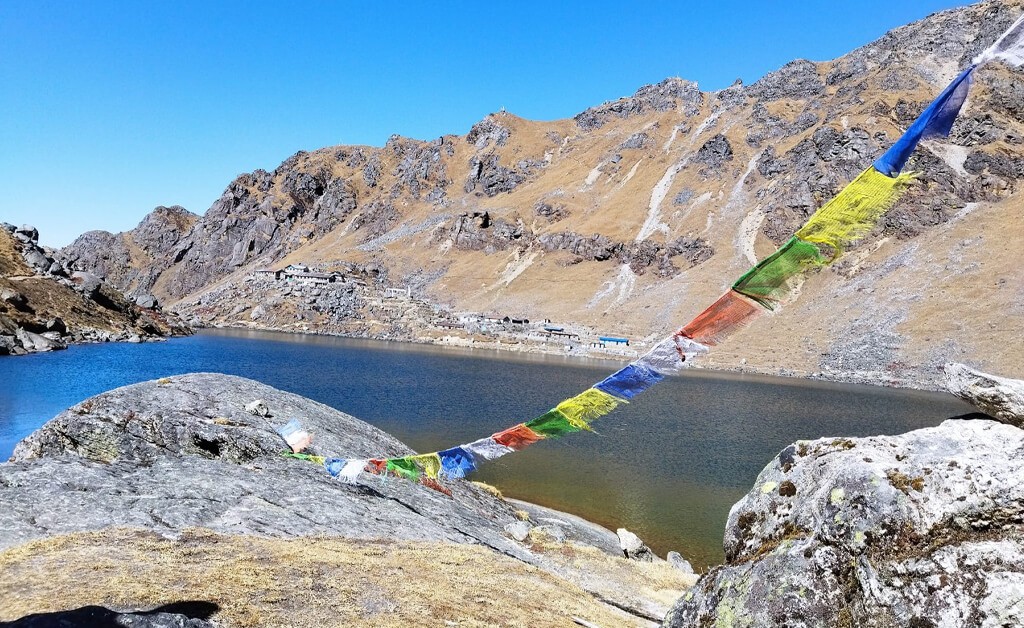
The Gosainkund area is named after the primary attraction which is several high-altitude lakes. It is a very holy religious site for both Buddhists and Hindus. Several legends exist concerning the formation of the lake. One commonly accepted version simple described here mentions Gods trying to obtain immortality from the ocean. As a result, the ocean became unbalanced, and poisons rose to the surface. Then the Hindu god Lord Shiva sacrificed himself after seeing the poisons and drank it. He became very ill and thirsty, so he traveled into the Himalayas and created the lakes by piercing the snow-covered mountainside to obtain pure water to cure a terrible sickness and thirst. There are five or more lakes at the area called Gosainkund but the two largest lakes are referred to the most. The are roughly 14,000 feet in elevation. They lie on a ridge just off the crest and the waters collected here by the snows forms the headwaters of the Trisuli River.
Gosainkund is quite easily accessible and takes only 5 days to reach from Kathmandu. Two buses daily leave from the new bus park in Kathmandu to Dhunche (100 Nepali Rupees) with a lunch stop in Trishuli. Bye your bus ticket the day before you want to leave to reserve a seat. The new bus park is about 20 to 30 minutes away from the tourist area of Kathmandu (Thomel). The taxi ride out to the bus park may cost about the same as the ticket itself but it’s worth getting a seat to insure smooth travel. The bus ride by most tourists’ standards is scary and a jaw breaker. It takes about 6 hours from Kathmandu to Dhunche (the end of the road more or less). The ride is very beautiful especially during the rice growing season.
Itinerary
Day 1: Arrival at Kathmandu, drive to Trishuli to Dhunche
Kathmandu to Trishuli by bus takes about 3 hours. The bus stops for a 20-minute lunch in Trishuli and then continue to Dhunche. The 1st bus usually gets to Dhunche by 3:00 pm and the 2nd bus about 5:00 pm. are prepared for a late bus though. Breakdowns do happen. Sleep in one of the handful of lodges in Dhunche. A nice peaceful village with great people. (Sleep at 6,450 feet)
Day 2: Walk to Singh Gompa
Walk to Singh Gompa (about 5 hours) and pass through a few usually closed tea houses along the way. Its fairly straight up but this is Nepal (sleep at 10,675 feet)
Day 3: Walk to Lauribina Yak
Walk to Lauribina Yak (about 3 hours). The walk this day is much easier as the first half of the walk is what Nepali”s call flat…be prepared for muddy trails if there is any snow around which melt about 3 hours after sunrise. (Sleep at 12,800 feet – you feel the altitude here).
Day 4: Walk to Gosainkunda
Walk to Gosainkund (about 3 hours). Sleep at Gosainkund at 13,400 feet if you want to continue over the two passes and go back to Kathmandu via Helambu or stop for a few hours and return back the same day to Lauribina Yak or Singha Gompa depending on your pace. If tea house is closed, then stay in Ranipauwa a second night to better acclimate.
Day 5: Return back down Dhunche
Return back down Dhunche or go to Syabru 6,950 feet. People with knee problems should be ready for a physical and mental breakdown.
Costs Included
- 4 breakfasts, 4 lunches, and 3 dinners along the trek (one hot drink included with each meal)
- Tea house–based accommodation throughout the trek
- Transportation by tourist bus to/from Kathmandu–Dhunche (private transport available as an add-on)
- Langtang National Park entry permit
- Experienced trekking guide (number of guides depends on group size)
- Basic first-aid support for minor injuries
- Trek photos and videos as souvenirs (captured with GoPro/iPhone)
Costs Excluded
- Accommodation in Kathmandu and any meals there
- Personal expenses for amenities such as Wi-Fi, hot showers, bottled water, and hot drinking water
- Any hot or cold beverages other than those mentioned in the Cost Includes section
- Any additional meals not specified in the Cost Includes section
- Additional accommodation beyond what is mentioned
- Travel insurance is not provided and must include emergency helicopter rescue and medical evacuation
- Porter service is not included
- Tips and gratuities for trekking guides